They say journalism is the first rough draft of history—but what about films that confront historical events on screen? Are these works attempts at historical record or cinematic stories that use the past to uncover deeper emotional truths?

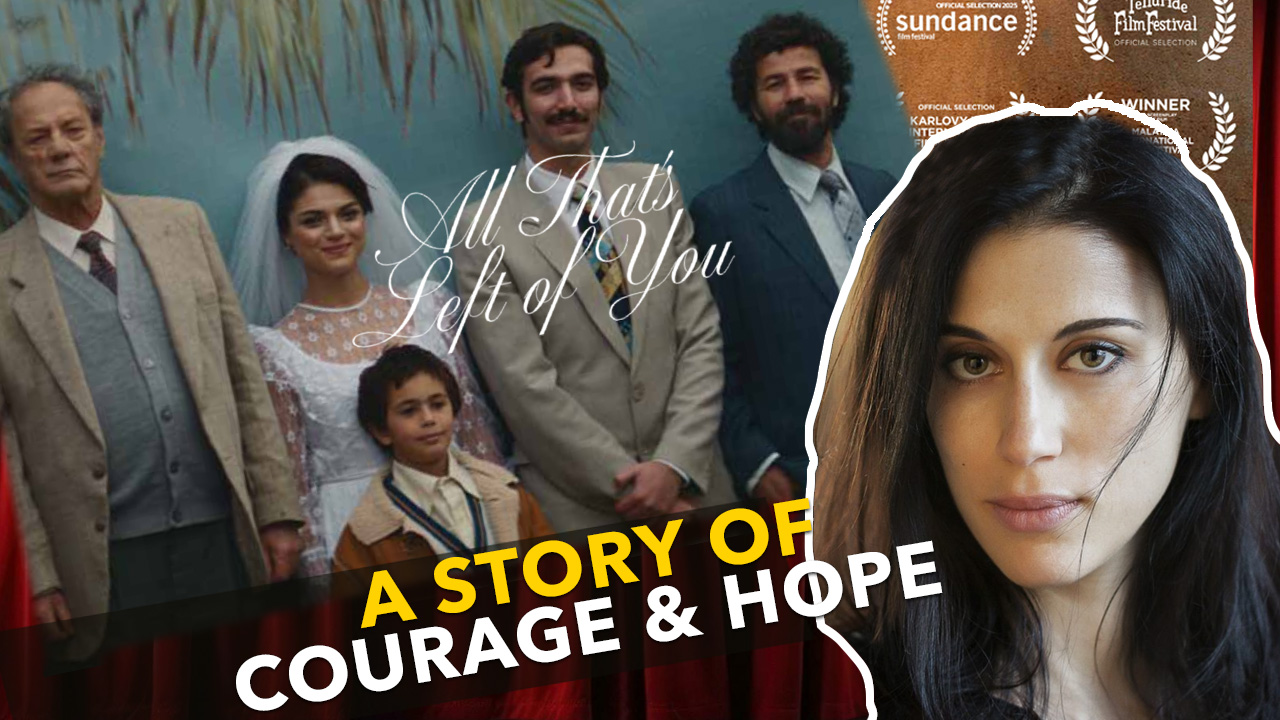
With her new film ALL THAT’S LEFT OF YOU, filmmaker Cherien Dabis brings a bold and deeply human perspective to a chapter of history rarely explored in American cinema. While the film depicts the Nakba and the 1948 expulsion from Jaffa, Dabis goes far beyond historical recreation—crafting a powerful emotional narrative that stands among the finest films of the year.

This sweeping, multigenerational epic follows one family across 70 years, tracing their journey from displacement during the 1948 war to life as refugees in the West Bank and beyond. Dabis stars in the film alongside three extraordinary actors from the renowned Bakri family—Adam Bakri, Saleh Bakri, and Mohammad Bakri—whose performances bring the family’s story to life with remarkable authenticity and depth.

After premiering to acclaim at the Sundance Film Festival, ALL THAT’S LEFT OF YOU went on to win the prestigious Audience Award at the Sydney Film Festival. The film has now been chosen as Jordan’s official submission for Best International Feature at the Academy Awards, and we believe it has every chance of making the year’s shortlist. To hear more about ALL THAT’S LEFT OF YOU, please sit back and enjoy our conversation with filmmaker, writer, and actress, Cherien Dabis, starting now on INSIDE THE ARTHOUSE

One has to wonder what Miguel de Cervantes would make of Patrick McCullum. As we meet Patrick at the start of Gabe Polsky’s documentary THE MAN WHO SAVES THE WORLD?, we aren’t quite sure what to make of him. And, frankly, filmmaker Polsky isn’t sure either.

Is Patrick, a self-proclaimed healer and mystic, truly the person who will fulfill a prophecy and bring unity and protection to the indigenous people of the Amazon? Or, like the hero of Cervantes’s novel Don Quixote, is he just a crazy kook tilting at windmills?

With filmmaker Polsky as our Sancho Panza, and with a question mark hanging at the end of the film’s title, we are along for the ride as we try to figure out whether Patrick – or anyone else – can truly save the world.  

By the nature of the word, we have come to expect that documentaries will deal in certainty. But THE MAN WHO SAVES THE WORLD? reminds us that sometimes, it pays to recognize and respect that there are things we don’t — or perhaps can’t — fully know.

The film also features an appearance by Dr. Jane Goodall, whose lifelong commitment to compassion, science, and the natural world continues to inspire generations. In light of her recent passing, we honor her extraordinary life and the wisdom she shared with such grace — both in this film and throughout her remarkable journey.

To learn more about this fascinating film, join us for our conversation with Gabe Polsky on INSIDE THE ARTHOUSE, starting now.

You may not be overly familiar with the 2000s TV show To Catch a Predator,” but chances are you’ve heard about it. Originally starting as a segment on NBC Dateline, the Chris Hansen–hosted program became a cultural sensation, drawing huge audiences even as critics questioned its sordid tone and the ethical and legal issues surrounding its infamous “sting” operations.

Although To Catch a Predator” went off the air in 2008, the rise of internet entertainment sparked a wave of copycat shows, and Chris Hansen himself returned with new true crime programming on streaming platforms. Yet, with all the popularity surrounding Hansen and these types of programs, the bigger questions — Should these shows exist? Are they truly helping solve problems, or exploiting them? — have often been ignored.

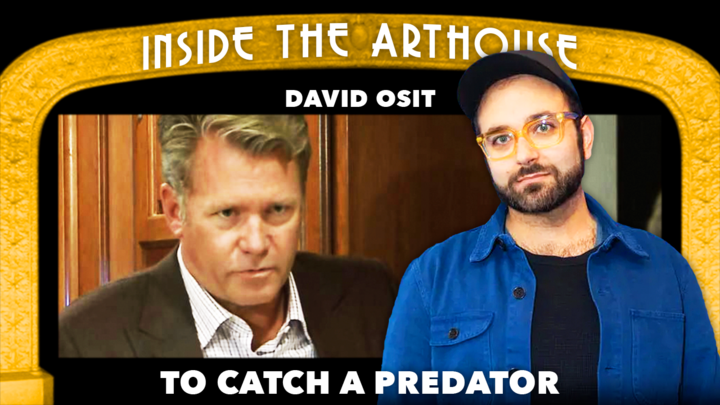
In PREDATORS, award-winning filmmaker David Osit (MAYOR, THE BALLAD OF LEFTY BROWN) shines a powerful light on this phenomenon. His documentary dissects why audiences are drawn to these programs, puts Chris Hansen and others under scrutiny, and challenges the ethics of entertainment disguised as justice.

Praised by critics as one of the year’s best documentaries — and already generating Oscar buzz — PREDATORS is a must-see for anyone interested in true crime, media ethics, or the intersection of entertainment and justice.

Join us for our conversation with David Osit, where we dive deep into his filmmaking process, the legacy of “To Catch a Predator”,and the cultural fascination with predator-hunting shows. On INSIDE THE ARTHOUSE, starting now… 

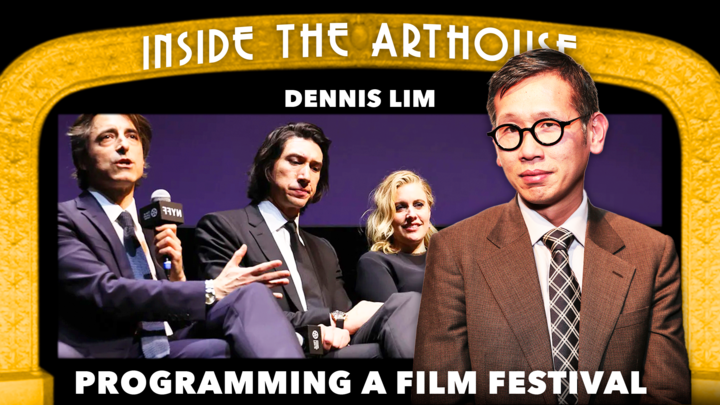
The New York Film Festival (NYFF) may not be the oldest film festival in the United States, but for more than 60 years, it has been one of the most influential, premiering some of the most important films and filmmakers in the history of cinema.  


From Luis Buñuel’s  THE EXTERMINATING ANGELthe opening night selection in 1963, to RaMell Ross’s NICKEL BOYS in 2024, the festival has consistently set the stage for awards season and marked the beginning of the race to the Oscars.

In this episode of INSIDE THE ARTHOUSE, we sit down with Dennis Lim, the festival’s Artistic Director and former film critic at the Village Voice, to discuss how the NYFF program is curated, what makes this event unique, and what audiences can expect from the 2025 New York Film Festival. Lim also shares insights on the broader programming of Film at Lincoln Center, one of the most vital institutions for independent and international cinema in the U.S.

Join us as we sit down with festival director Dennis Lim on INSIDE THE ARTHOUSE, starting now.


The world could use Elie Wiesel right now. A voice with the moral integrity and courage to speak truth to power—no matter the cost.

Whether it was challenging Ronald Reagan over his decision to visit the Bitburg Cemetery, where SS soldiers were buried, or confronting Bill Clinton about America’s inaction during the ethnic cleansing in Bosnia, Wiesel never wavered in his fight against injustice and his relentless pursuit of a world free of the kind of genocide that scarred his youth.

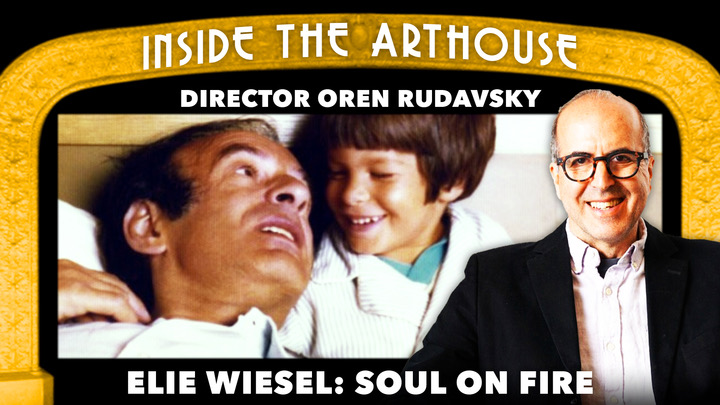
Wiesel is no longer here to provide that kind of prophetic guidance. But in Oren Rudavsky’s film, ELIE WIESEL: SOUL ON FIRE, we do have the rare opportunity to spend time with Wiesel, with his wife and children, and with the teachers and students who continue to carry on his work.

Told in his own words and eloquent voice, the film captures Wiesel’s conflicts, memories, and enduring legacy as one of the most public survivors to the Holocaust.

Whether you know Wiesel’s story or are discovering it for the first time, ELIE WIESEL: SOUL ON FIRE is a moving, deeply inspirational portrait. We hope our conversation with the filmmaker encourages you to seek out this remarkable film.

Join us for our conversation with director Oren Rudavsky on INSIDE THE ARTHOUSE, starting now.

Writer and philosopher George Santayana wrote in 1905: “Those who cannot remember the past are condemned to repeat it.”

That idea has clearly inspired filmmaker Connie Field. Her award-winning documentaries on politics, history, and social change help us understand today’s world by drawing vital lessons from the past.

When women from the Baby Boom generation were entering the workforce, her groundbreaking film The Life and Times of Rosie the Riveter revealed the powerful stories of women who worked in World War II factories.

As voter suppression became a growing issue in parts of the U.S., her Oscar-nominated Freedom on My Mind reminded us of the importance of voting rights by documenting voter registration struggles in Mississippi during the 1960s Civil Rights Movement.

Now, Connie Field turns her lens to Europe—examining the election, defeat, and return to power of Viktor Orbán in Hungary.

The result is DEMOCRACY NOIR — a timely and chilling look at how democratic institutions can be weakened and reshaped into tools of authoritarian rule.

Democracy Noir is an urgent, important film. And we’re honored to share our conversation with Connie Field about the film—and about the state of democracy— on Inside the Arthouse, starting now…


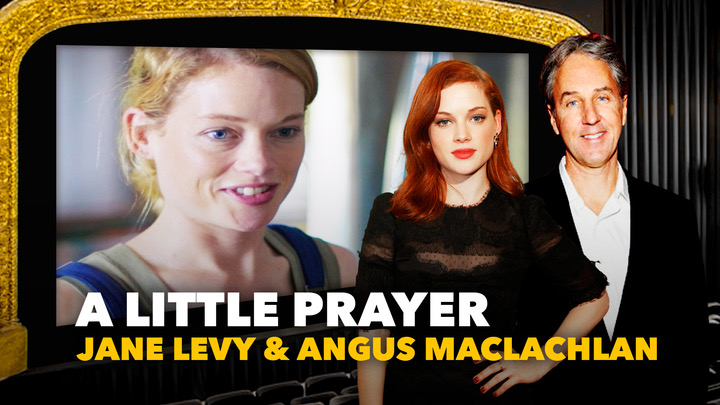
There’s something magical about watching great actors fully inhabit their characters—especially when a talented director gives them the space to riff and discover new layers. In A LITTLE PRAYER —the latest drama from acclaimed writer-director Angus MacLachlan (Junebug)—the performances feel lived-in, heartfelt, and deeply human.

Veteran stars David Strathairn (Good Night, and Good Luck) and Celia Weston (Dead Man Walking) portray an older married couple navigating the challenges of their adult children. But their greatest joy? Their daughter-in-law—played by breakout talent Jane Levy (Zoey’s Extraordinary Playlist). Levy delivers a luminous performance, balancing sweetness and steel, evoking comparisons to Amy Adams in the Oscar-nominated Junebug.

Lightning may not strike twice, but Angus MacLachlan has once again discovered a new star. Jane Levy’s role in A LITTLE PRAYER confirms she’s one to watch in American independent cinema.

A LITTLE PRAYER starts now, right here on INSIDE THE ARTHOUSE.

Genre in film is a way we group stories — by shared style, form, or subject. 

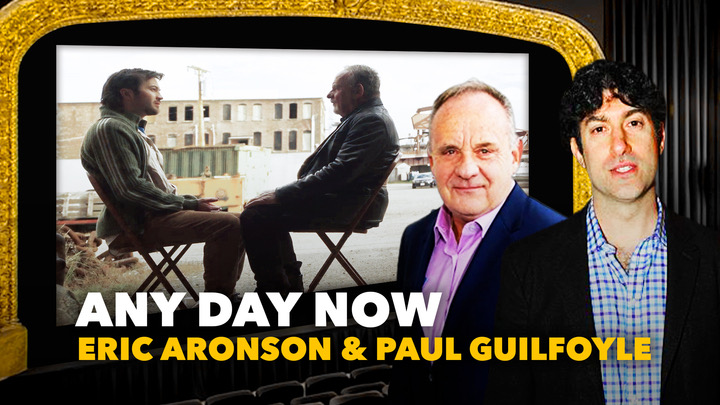
In the new film ANY DAY NOW, writer-director Eric Aronson takes the familiar framework of a heist movie and flips it on its head. Instead of leaning on nonstop action, Aronson delivers a sharp, character-driven story that leans on comedy — anchored by veteran actor Paul Guilfoyle, whose wit and depth shine in every scene.

At the center of the story is the infamous 1990 Isabella Stewart Gardner Museum robbery in Boston — one of the most audacious and unsolved art heists in American history. Thirteen priceless paintings vanished without a trace, but here the crime is the backdrop to a more intimate tale: how people, in a specific time and place, can collide in ways that reveal our quirks, contradictions, and unexpected outcomes.

As you’re about to see, Eric Aronson and Paul Guilfoyle had an undeniable chemistry bringing ANY DAY NOW to life. Join us as they share the inside story of making their film, on Inside the Arthouse, starting now… 

Posted in All

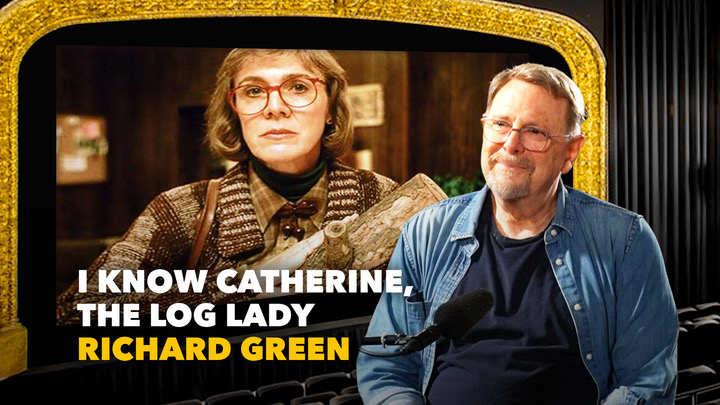
For so many of us who grew up captivated by the strange, haunting world of Twin Peaks, the Log Lady was a mystery, a messenger, and somehow—comforting. But what we didn’t always know was that the actress who played her, Catherine Coulson, was so much more than her role. She was a beloved collaborator of David Lynch, one of the earliest female camera assistants in Hollywood, and someone whose quiet presence left a deep impression on everyone she worked with.

A new documentary titledI KNOW CATHERINE, THE LOG LADY is more than a portrait of a beloved character—it’s a revealing and heartfelt exploration of the woman behind the legend. Through rare archival footage, intimate interviews, and stories from those who knew her best, this film traces Coulson’s singular journey from the sets of avant-garde student films, her prolific career as a stage actress, to the heart of one of television’s most enigmatic creations.

At once a celebration and an act of remembrance, this documentary captures the spirit of a true original—someone who, like her famous counterpart, saw things most of us couldn’t and never stopped quietly guiding us toward something deeper, stranger, and more profound.

Join us with director Richard Green as we sit down with him to discuss his film, I KNOW CATHERINE, THE LOG LADY, on INSIDE THE ARTHOUSE, starting now…

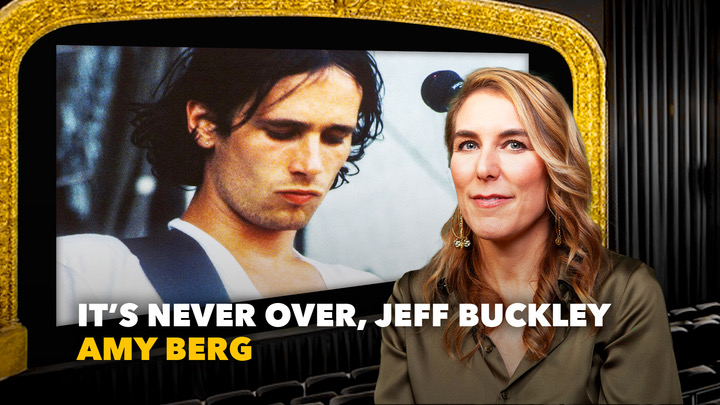
You may not be familiar with Jeff Buckley’s name. But you almost certainly have heard his haunting cover of Leonard Cohen’s HALLELUJAH, a song which was named to Rolling Stone Magazine’s list of the 500 Greatest Songs of All Time and has been inducted into the Library of Congress’s National Recording Registry. 

In this episode of Inside the Arthouse, we sit down with Oscar-nominated filmmaker Amy Berg to discuss her new documentary, It’s Never Over, Jeff Buckley.

Tragically, Buckley drowned while swimming in the Wolf River in Memphis just as he was about to start work on his second album. But his stature as a singer and songwriter has only grown in the years since his early death at the age of 31. Acclaimed by musicians like Bob Dylan, David Bowie, and Jimmy Page, Jeff Buckley’s life and legacy is being given a thoughtful and thorough review in this new documentary — which includes a treasure trove of archival material,  candid interviews with Buckley’s family and friends, lovers and collaborators. We emerge from the film with a greater understanding of the forces that shaped his artistic aspirations and an appreciation for all that he accomplished in his short life. 

Join us for our conversation with filmmaker Amy Berg, on INSIDE THE ARTHOUSE, starting now…